

What if the fear of aging left a tangible mark on the body? A study conducted on a large sample of women in the United States establishes a link between anxiety related to aging, particularly the fear of declining health, and accelerated biological aging. A hypothesis long debated is now being explored at the molecular level.
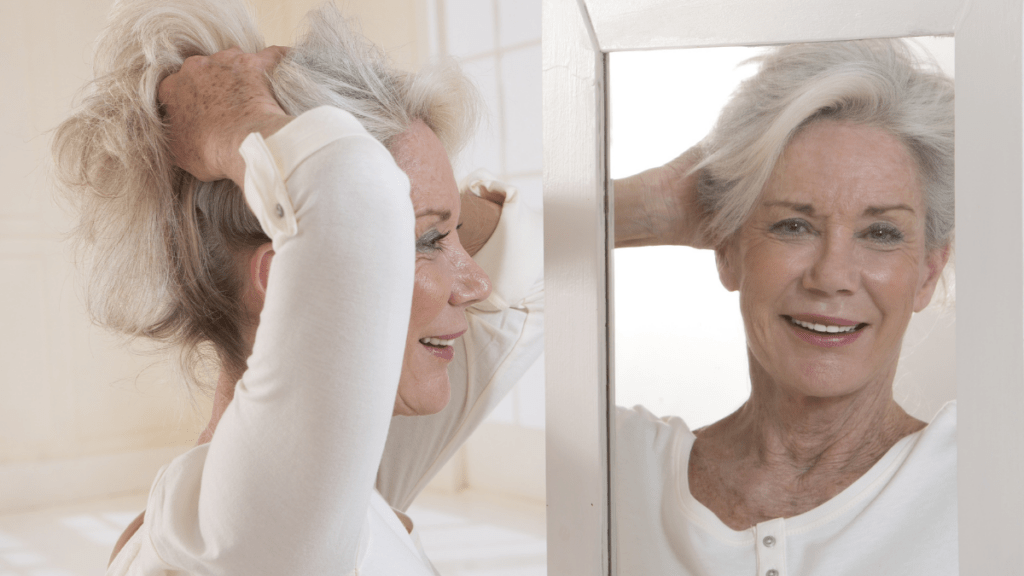
- A recent study conducted in the United States shows that fear of declining health in women is associated with measurable biological aging, as assessed using epigenetic clocks.
- Not all forms of age-related anxiety are equal: concerns about appearance or fertility do not accelerate biological aging, unlike the fear of losing one’s health.
- Chronic stress and anxiety can influence the body at the cellular level through inflammation, cortisol, and DNA changes, without proving a direct causal link.
- While the body seems to be sensitive to how we view our age, it is crucial to remember that the study does not prove that anxiety “causes aging”; rather, it highlights a link between psychology, social context, and biology.
Fear of aging: an anxiety written into our DNA?
What if worrying about aging actually made you age faster – literally? This is the question raised by a study published in 2025 in the scientific journal Psychoneuroendocrinology, titled “Aging Anxiety and Epigenetic Aging in a National Sample of Adult Women in the United States.”
Researchers analyzed data from 726 American women participating in the national MIDUS cohort (Midlife in the United States), a large longitudinal study launched in the 1990s to examine the determinants of aging.
The originality of the research lies in the use of epigenetic clocks, tools capable of estimating biological age based on chemical modifications to DNA, particularly DNA methylation.
Two indicators were used:
- DunedinPACE, which measures the current pace of biological aging
- GrimAge2, which estimates the accumulation of biological damage associated with mortality risk
In other words, the study did not rely on subjective feelings or perceptions. Instead, the researchers aimed to determine whether anxiety about aging could be correlated with measurable bodily aging at the cellular level.
Fear can take many forms
The scientists identified three types of aging-related anxiety:
- Fear of declining health
- Fear of losing physical attractiveness
- Fear of becoming too old to have children
Among these, one dimension clearly stood out: fear of health decline. This type of anxiety was significantly associated with accelerated biological aging as measured by DunedinPACE.
More specifically, each increase in anxiety related to health decline corresponded to an acceleration of 0.07 standard deviations in the DunedinPACE score, indicating slightly faster biological aging.
In simple terms, women who were most worried about their health deteriorating tended to show biological markers suggesting faster aging than their chronological age.
By contrast, anxiety related to physical appearance or fertility did not show a strong association with these molecular markers. In other words, it is not the fear of “looking old” that appears to have a measurable biological impact, but rather the fear of becoming ill or physically diminished.
Social context and stress-related behaviors: the real drivers?
Should we conclude that fear of aging makes people age faster?
The study is cross-sectional, meaning it observes anxiety and biological age at a single point in time. As a result, it cannot establish a clear cause-and-effect relationship. It is possible that women who are already in poorer health – and therefore biologically older – may naturally feel more concerned about aging.
This highlights the important role of social and economic context in shaping fears related to aging.
Another key finding is that when researchers adjusted their analysis to account for health behaviors, such as smoking, alcohol consumption, and body mass index, the association became weaker. This suggests that part of the relationship may be explained by stress-related behaviors, rather than a direct effect of anxious thoughts on cellular aging
The body may respond to how we think about aging
One central message emerges from the study: our perceptions of aging are not neutral. They may be linked to biological processes that can be measured scientifically.
The research does not demonstrate that anxiety accelerates time itself. However, it suggests that the body may not remain entirely indifferent to the way individuals perceive their future and the aging process. In other words, the relationship between psychology, social environment, and biology may be closer (and more complex) than previously thought.
Published by the Editorial Staff on